Rara Labs
Health Checklist Management System
Clinical protocols change faster than release cycles, so the work was building the thing that builds the checklists.
A patient-safety platform for hospital wards. Clinical staff run daily-goals checklists against admitted patients across prevention, process of care, safety and quality, tracking vitals, harm levels and interventions over a stay. I built the frontend in React and Chakra UI, centred on the tool clinicians use to author those checklists themselves.
Clinical protocols are neither static nor uniform. They differ by ward, by hospital and by regulator, and they get revised. Hard-coding them would have meant a developer and a deploy for every rule change. What the product needed was a builder expressive enough to encode a clinical decision tree and usable by someone whose job is medicine.
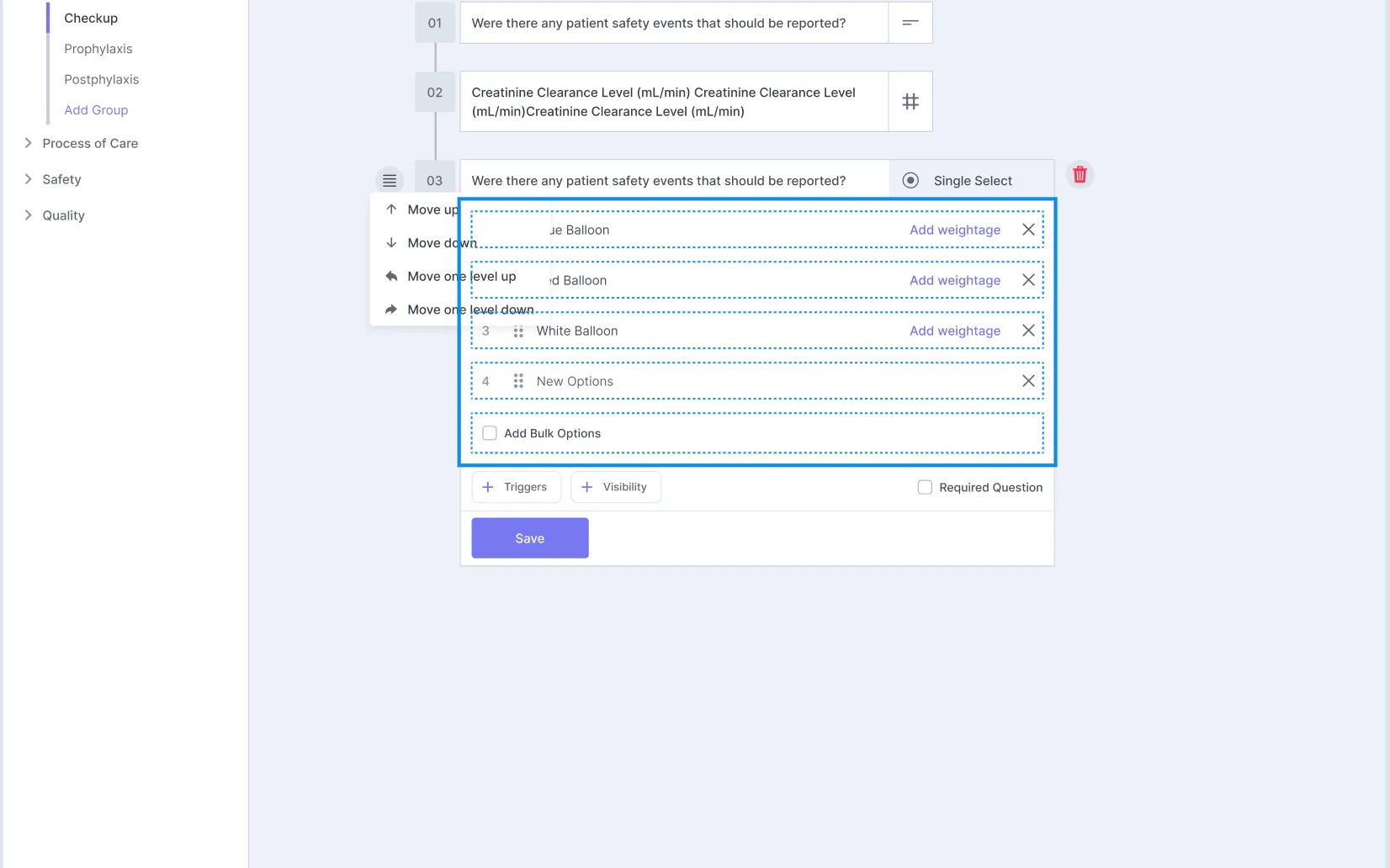
- Modelled the checklist as a tree and kept the whole editing session in a Zustand store. Adding a question, dragging one across groups, promoting a node a level up and deleting a branch all operate on one normalised structure, which keeps undo coherent and lets the preview render from the same state the editor is mutating.
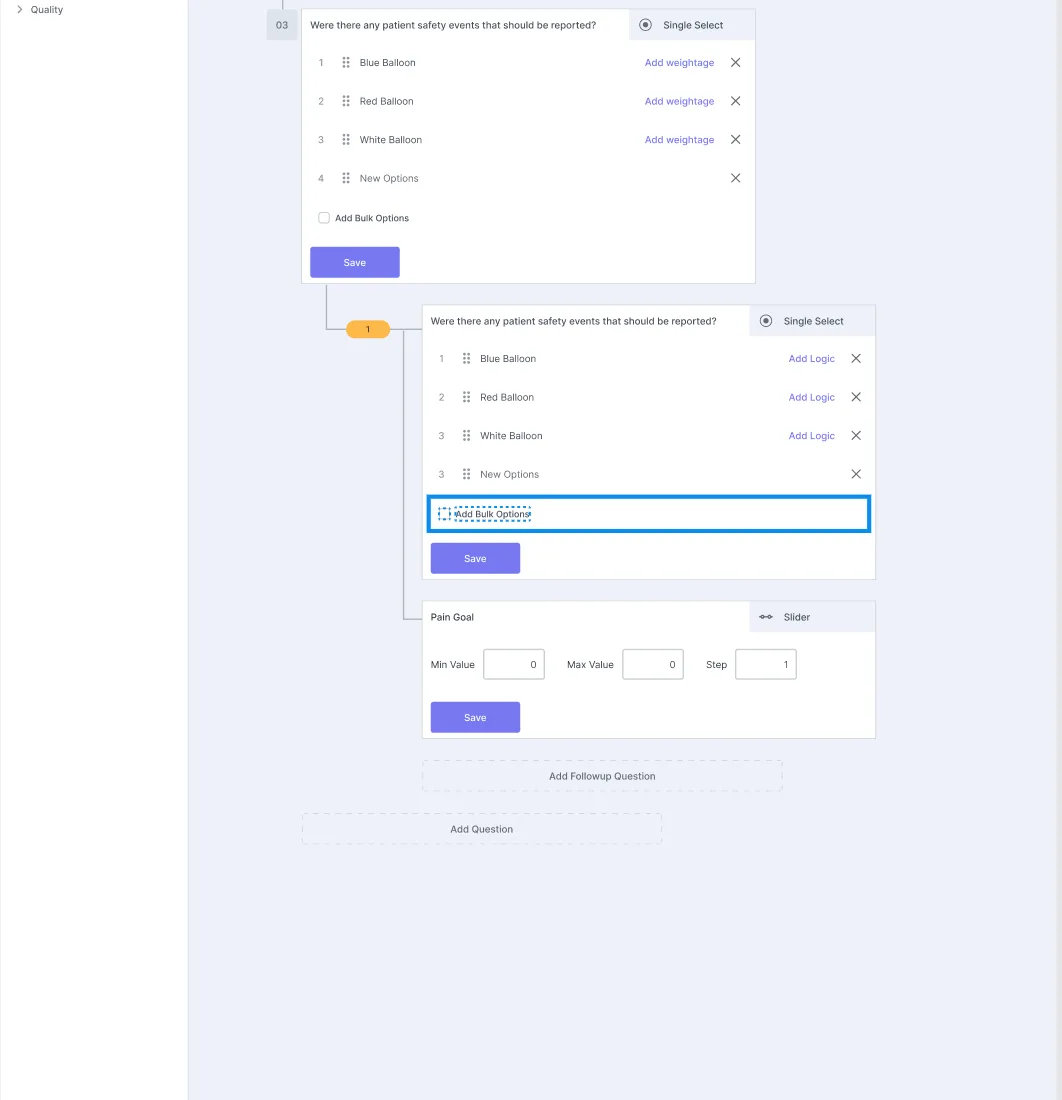
- Implemented the branching logic layer. Any answer option can trigger a follow-up question, and the graph is drawn as explicit nodes and edges, so a clinician sees the path a patient's answers will take instead of inferring it from a form.
- Built the dynamic form renderer that turns that tree into a running checklist. Question types (single-select, numeric, free text, sliders with min, max and step) resolve to components at runtime, visibility rules evaluate against answers already given, and weighted scoring accumulates as the clinician works.
- Handled the builder layout in code: a canvas of nested, connected question cards that has to stay legible as the tree grows, with a group sidebar, inline editors that expand in place, and drag-and-drop that reorders across nesting levels without the canvas jumping.
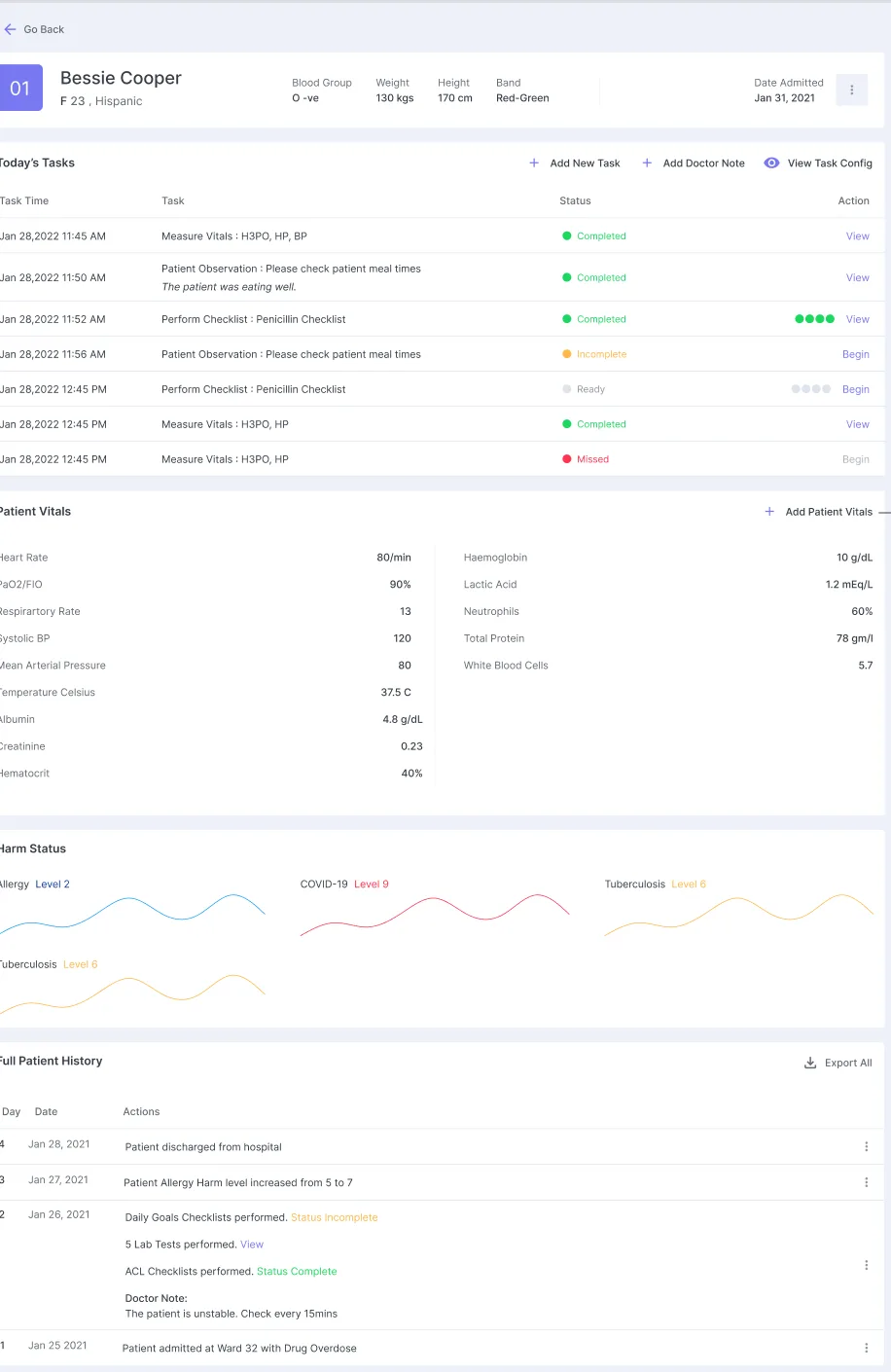
- Built the patient workspace over the checklist data: a time-stamped task ledger (completed, incomplete, missed), a vitals panel, harm-status trends across the admission, and an audit history of every checklist, lab and doctor's note.
Protocol changes stopped being engineering tickets. Clinicians author and revise their own checklists, and the ward keeps an auditable record of what was done, to whom, and when.
Want the walk-through? The fastest way to reach me is email.